Adaptation from Connecting Across Differences by James Borishade
Have you ever found yourself asking, “Why can’t they just think like I do?” Whether it’s a spouse, coworker, child, or friend, we all encounter people whose way of operating feels frustrating, even foreign. Maybe you thrive on structure and they live in chaos. Or maybe you love open-ended brainstorming while they want a concrete plan. Whatever the contrast, these relational frictions can leave us questioning compatibility, communication, and even calling.
But what if the very differences that annoy us most were never meant to be problems to fix? What if they were pieces of God’s design to embrace?
When God created us, he did so with intention. Every aspect of who we are—our personality, our gifts, our strengths, and even our weaknesses—was crafted with a specific purpose in mind. And while this purpose is personal, it is also relational. Our differences not only serve to complement one another but also reflect the unique domains we are called to influence in the world.
Think about it: Why are we all so different? Why is it that some people are naturally drawn to think more creatively while others (who might also think creatively) lean more heavily on process and structure? Why do some excel in the spotlight, while others feel more at home behind the scenes? The answer lies in the fact that each of us is created to fulfill a unique role, to exercise dominion over a specific domain. Our differences are not arbitrary.
Called to Different Domains: Discovering Your Unique Path to Impact
God created us with differences so we might influence different areas of life, what we might call “domains of purpose” or “calling.” In Genesis 1:28, when God blessed humanity and said, “Be fruitful, and multiply, and replenish the earth, and subdue it,” the charge was given not to an individual but to humankind as a whole. This dominion wasn’t about domination, it was a divine commission to steward creation with care, intention, and responsibility (J. Richard Middleton, The Liberating Image: The Imago Dei in Genesis 1 [Brazos Press, 2005]; John H. Walton, The Lost World of Genesis One [InterVarsity Press, 2009]). And while the command is shared, the expression of that calling plays out uniquely in each life.
Not everyone is wired to carry out their stewardship in the same way. Some people are drawn toward environments that prioritize beauty, imagination, and expressive potential—places where meaning is shaped through art, language, or emotion. Others are energized by systems, strategy, and logistic complexity, where order, structure, and problem-solving take center stage. But it’s important to recognize that these domains aren’t opposites. They are overlapping, complementary dimensions of the same human calling.
Even those in artistic or innovative spaces rely on structure, discipline, and logic to bring their visions to life. Likewise, those who build systems or lead in highly analytical spaces benefit from creative thinking, emotional intelligence, and intuition. The distinction is not about who uses structure versus who doesn’t, but about where each person begins, the primary strategies they lean on to move through the world and make meaning of their purpose.
A filmmaker and a financial planner may both operate with precision and creativity, but the way those strengths show up, and the problems they are designed to solve, differ. One brings stories to life that shape culture and awaken empathy. The other brings clarity to uncertainty, helping people build toward secure and flourishing futures. Both are fulfilling the Genesis mandate. Both are stewarding what they’ve been entrusted with. And both are necessary for a world that thrives.
God’s design is not for everyone to fit into the same mold but to recognize the mold they’ve been given and to form it faithfully. Diversity in this sense is not just a social virtue, it is a sacred strategy embedded in the blueprint of creation.
A person who is called to the arts will need different tools than someone called to engineering or finance. Just as a gardener needs different tools than a builder, we need different qualities, skills, and ways of thinking to thrive in our respective areas. These differences aren’t flaws, they are functional. They are what make us uniquely suited to our particular image of God.
Diversity of thought in leadership isn’t just about variety, it’s about depth. One person’s leadership may inspire creativity and vision, while another may bring practical wisdom and structure. When pastors and leaders collaborate and share the platform, the congregation has a fuller, richer spiritual experience. Think of it this way: just as we are called to different domains in life, different pastors or leaders are called to different aspects of teaching and shepherding. One leader may focus on spiritual healing, another on social justice, and yet another on biblical doctrine. When all of these voices come together, the congregation is strengthened in ways one person alone could never achieve.
Just as no two individuals are alike, no two leaders are called to lead in the same way. An organization, like any relationship, flourishes when its leaders embrace their differences and work together to create a richer, more complete experience for everyone. Diversity of thought, when embraced in leadership, mirrors a more intentional design for relationships—each person or leader brings something unique that enhances the whole.
It’s important to acknowledge that differences in relationships aren’t always easy. In fact, they often create friction, frustration, and misunderstanding. If you’ve ever been in a relationship—whether in marriage, a close friendship, or a working partnership—with someone whose strengths are vastly different from yours, you know how difficult it can be. It might feel like you’re speaking two completely different languages, constantly misinterpreting each other or getting stuck on the same issues. But here’s the thing: this friction isn’t without purpose.
The Bible tells us, “Iron sharpeneth iron; so a man sharpeneth the countenance of his friend” (Proverbs 27:17). And just as iron can’t be sharpened without some form of friction, our differences often challenge us in ways that lead to growth. These challenges push us out of our comfort zones, forcing us to see things from a different perspective, to stretch beyond what we think we know, and to learn new ways of thinking and being.
Adapted from Connecting Across Differences by James Borishade. ©2026 by Nojim Borishade. Used by permission of InterVarsity Press. www.ivpress.com.

Connecting across differences

A COLLECTION OF PRAYERS FOR OUR DAILY WORK

SPIRITUAL DISCIPLINE: INTENTIONALITY WITH OTHERS
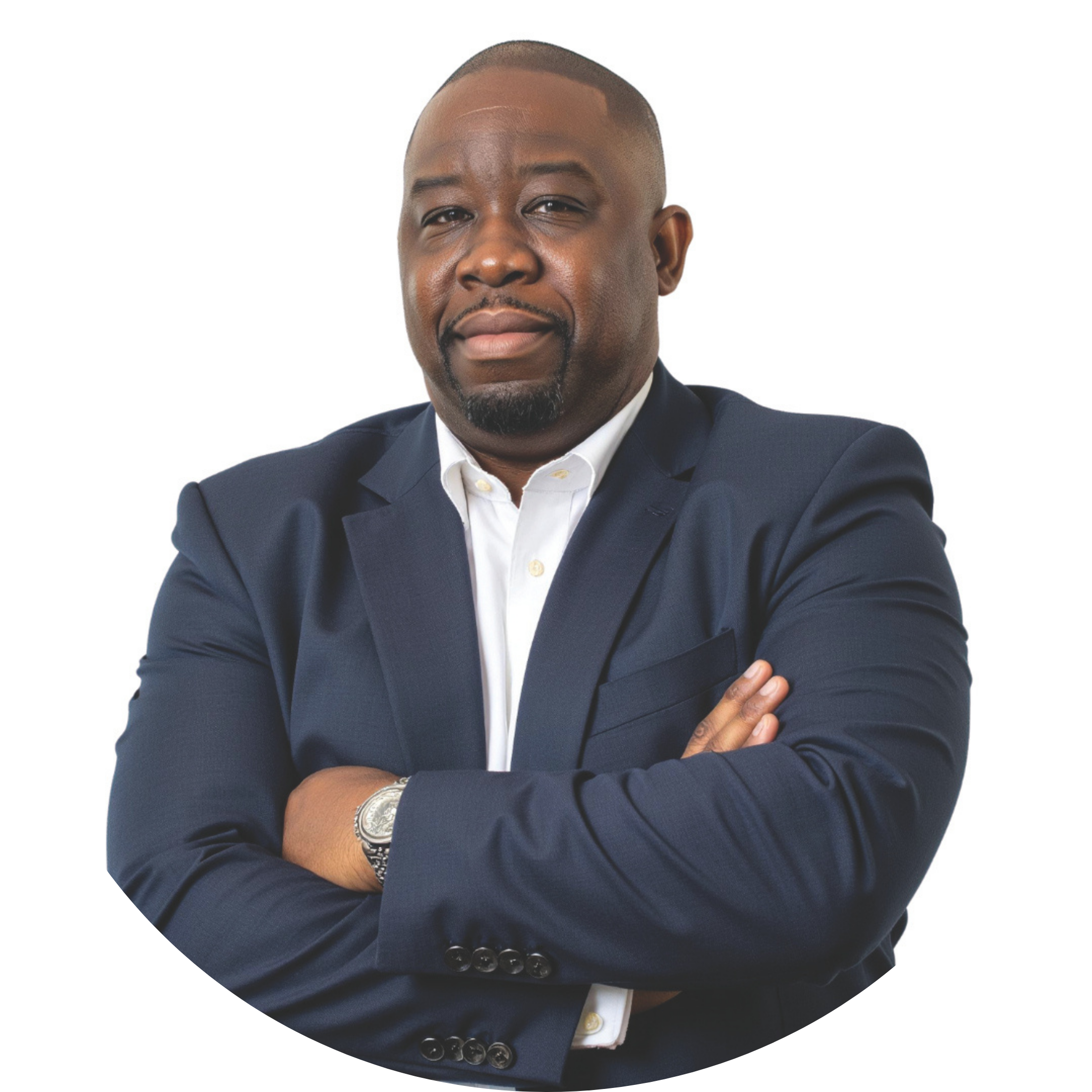
James Borishade
James Borishade (PhD, Christian Bible Institute and Seminary) is the CEO of Circle Urban Ministries. With
experience as the executive director of Jumpstart for Young Children and as a community leader, he has a deep understanding of how formative experiences shape individuals and communities. Borishade's work focuses on reconciliation, identity, and the imago Dei. He draws from research and practical experience to foster
understanding and healing. He is the forthcoming author of Connecting Across Differences: Skills for Healthy Communication at Work and Home (March 2026).